VECT TECHNOLOGY PAGE


ACTIVE SHIELD CONCEPT


Reframing the building envelope: from passive glazing to active energy control.

Modern buildings are no longer defined by form alone. They are defined by how efficiently they manage energy, climate and environmental impact. VECT transforms the façade into a functional engineering system — an active interface that controls heat, light and air interaction at the boundary of the building.

This is not glass. This is infrastructure embedded into the façade.

THERMAL MANAGEMENT & ENERGY PERFORMANCE


From Heat Gain to Heat Control


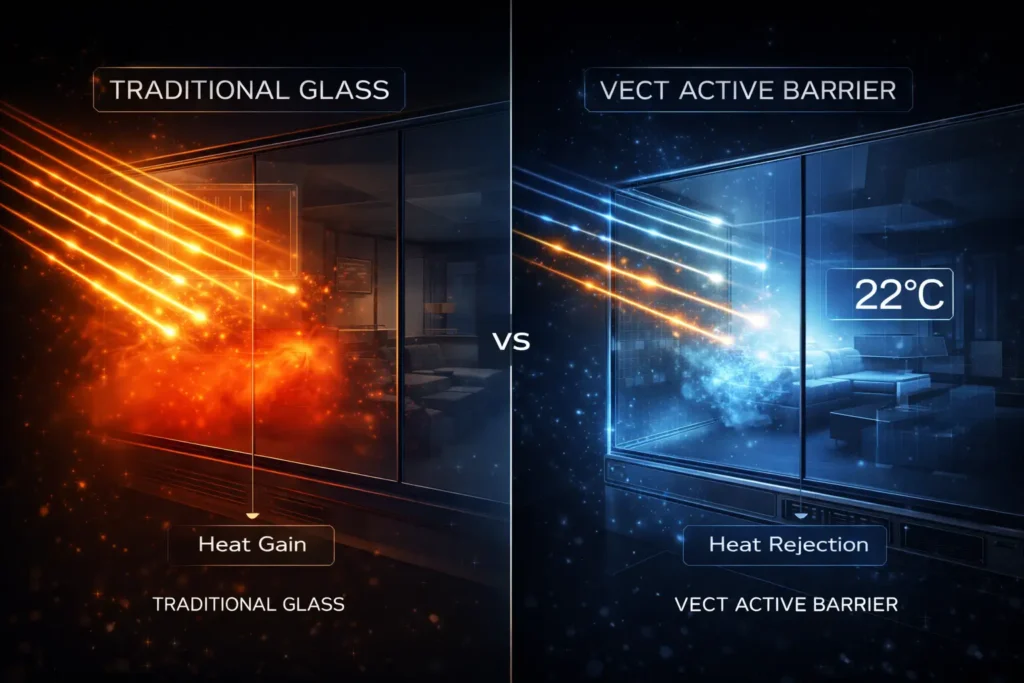
Conventional glazing allows solar heat to penetrate the building envelope, driving cooling demand and operational costs.


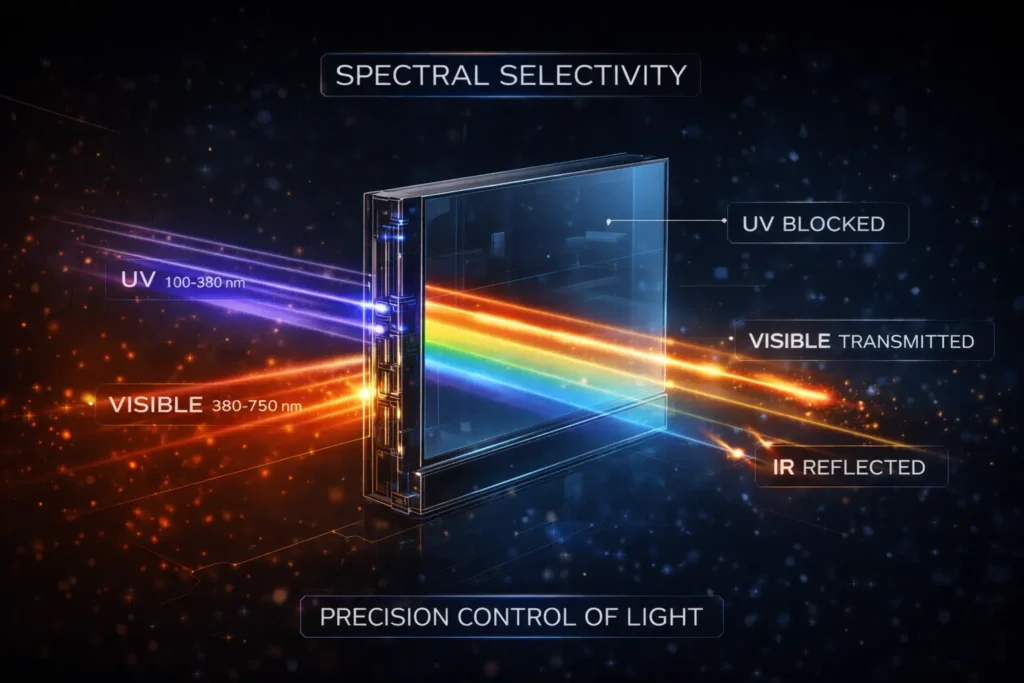
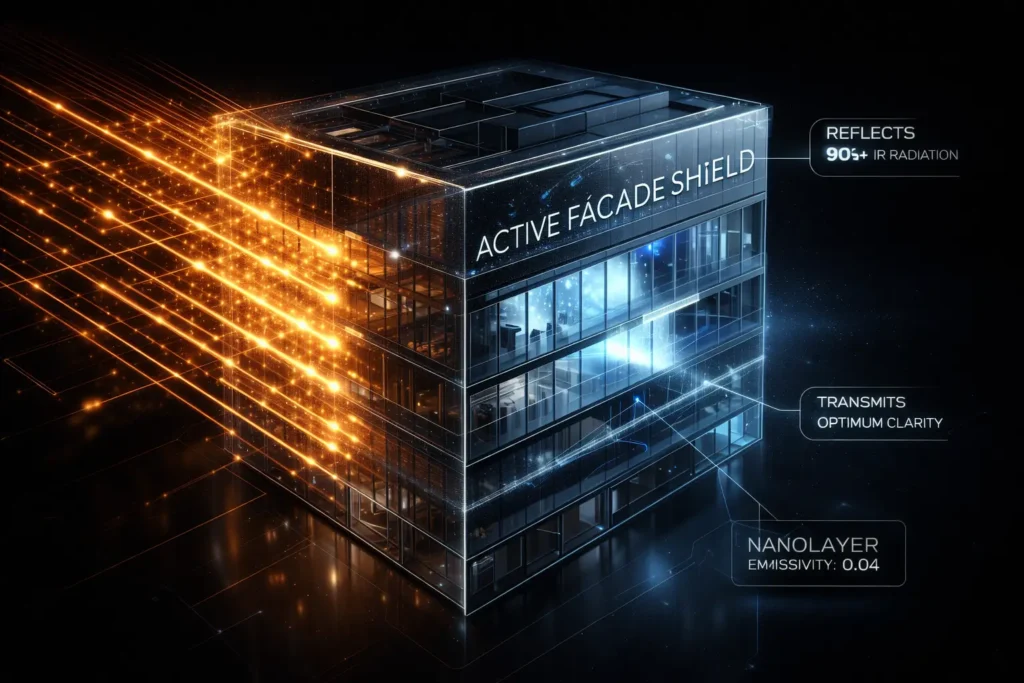
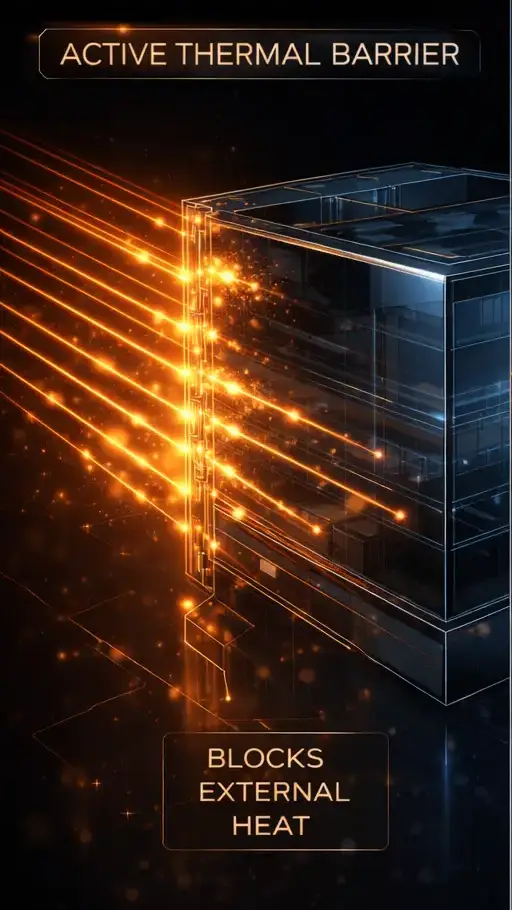
VECT introduces an Active Thermal Barrier — a nanostructured surface engineered to selectively manage radiation:

    • reflects up to 90–96% of infrared radiation
    • maintains full transparency in the visible spectrum
    • stabilises internal temperature under extreme external conditions

The façade becomes a control layer, not a passive element.

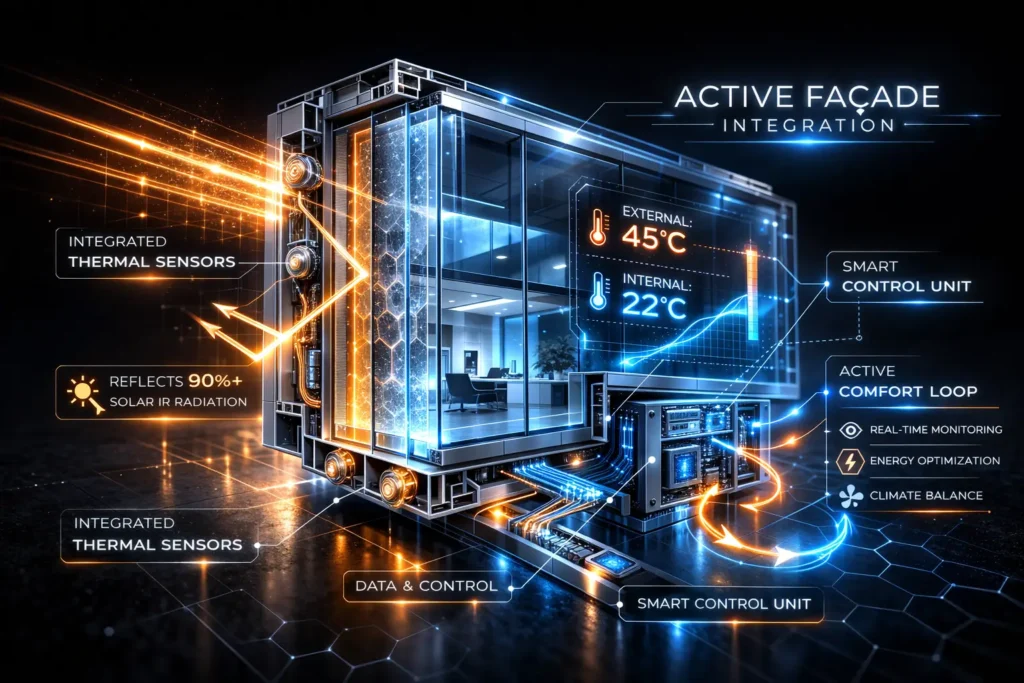
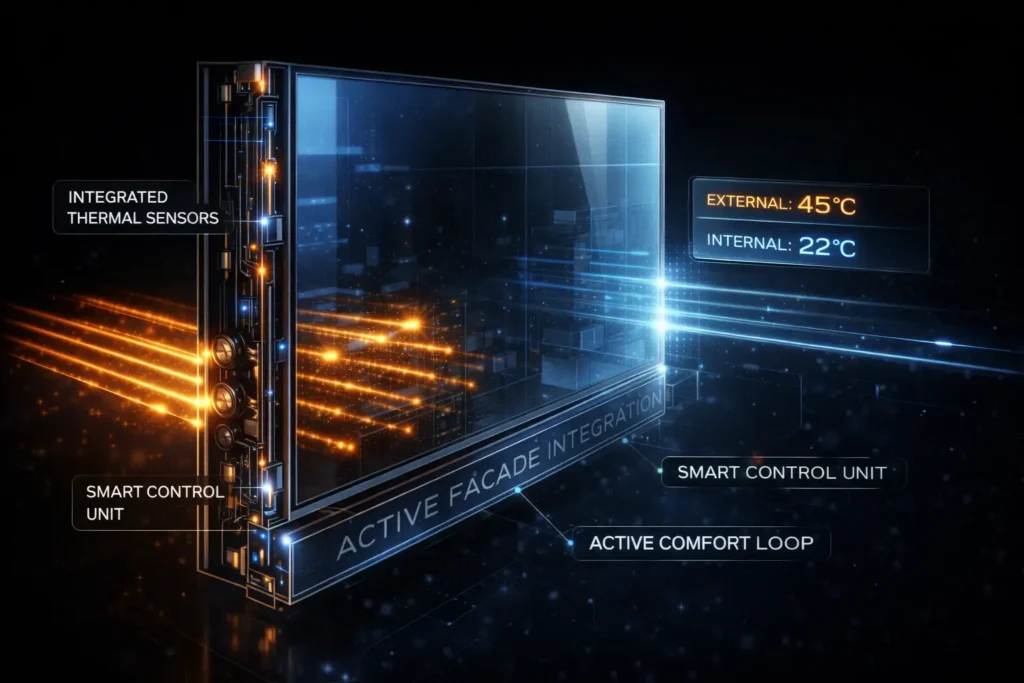
ACTIVE FACADE INTEGRATION

SMART FACADE MODULE

THERMAL CONTROL SYSTEM

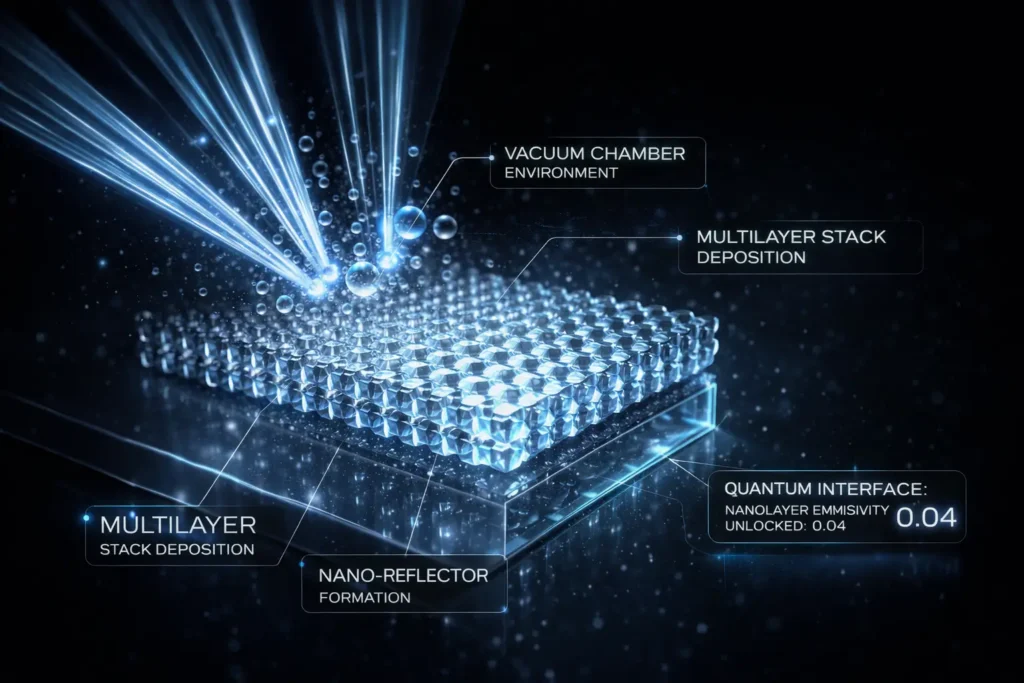
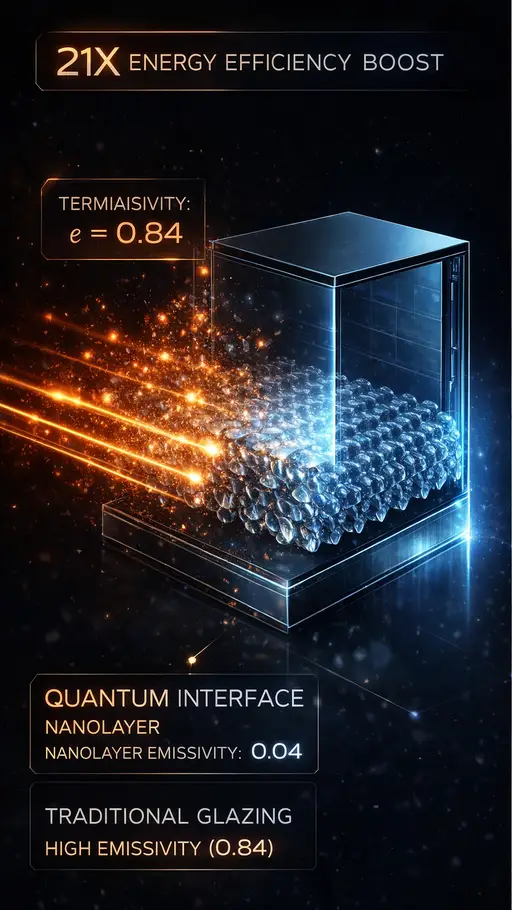
THE CORE MECHANISM: EMISSIVITY CONTROL


Thermal performance is governed by a single parameter: emissivity (ε).

      • Conventional glass: ε ≈ 0.84
      • VECT quantum layer: ε ≈ 0.04


This is a 21× reduction in thermal radiation exchange.


At nanoscale, we engineer a metallic lattice (10–15 nm) that:

      • remains invisible to visible light
      • acts as a barrier to long-wave infrared radiation
      • separates useful daylight from thermal load


In practical terms:

Light enters. Heat does not.

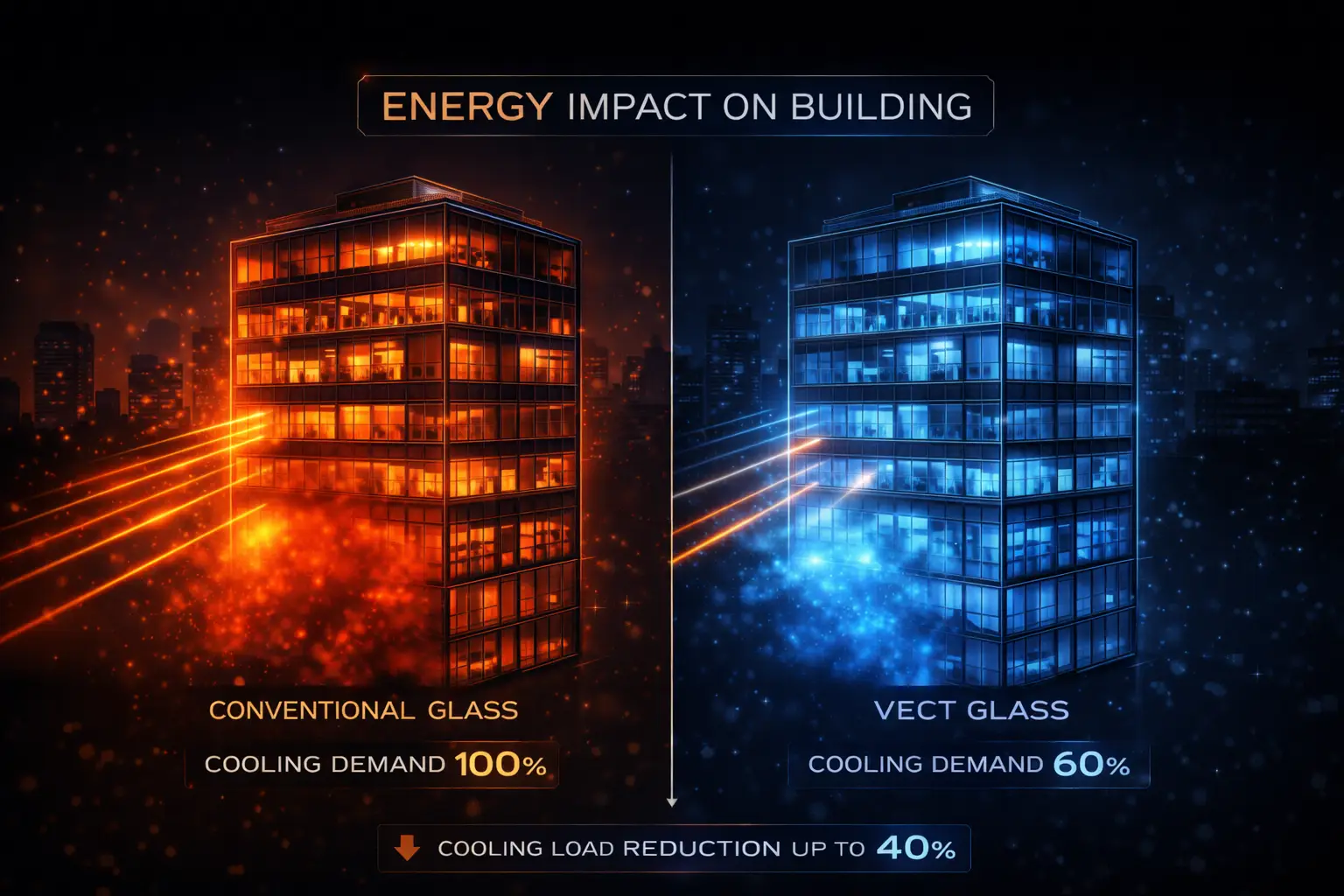
ENERGY IMPACT ON BUILDINGS


The effect is systemic.


By reducing solar heat gain at the façade level, VECT directly impacts HVAC demand:

      • up to 40% reduction in cooling load
      • lower peak energy demand
      • increased system stability under extreme climates

This is not marginal optimisation —

this is load reduction at source.

OPEX OPTIMISATION


Energy efficiency translates directly into financial performance.


Reducing thermal load enables:

      • lower CAPEX (downsized HVAC systems at design stage)
      • reduced operating costs (energy savings over lifecycle)
      • extended equipment lifespan (lower mechanical stress)

The façade becomes a financial lever, not just an architectural element.

VECT PURITY — SELF-CLEANING & AIR-ACTIVE SURFACE


QUANTUM PURITY

A façade that works continuously


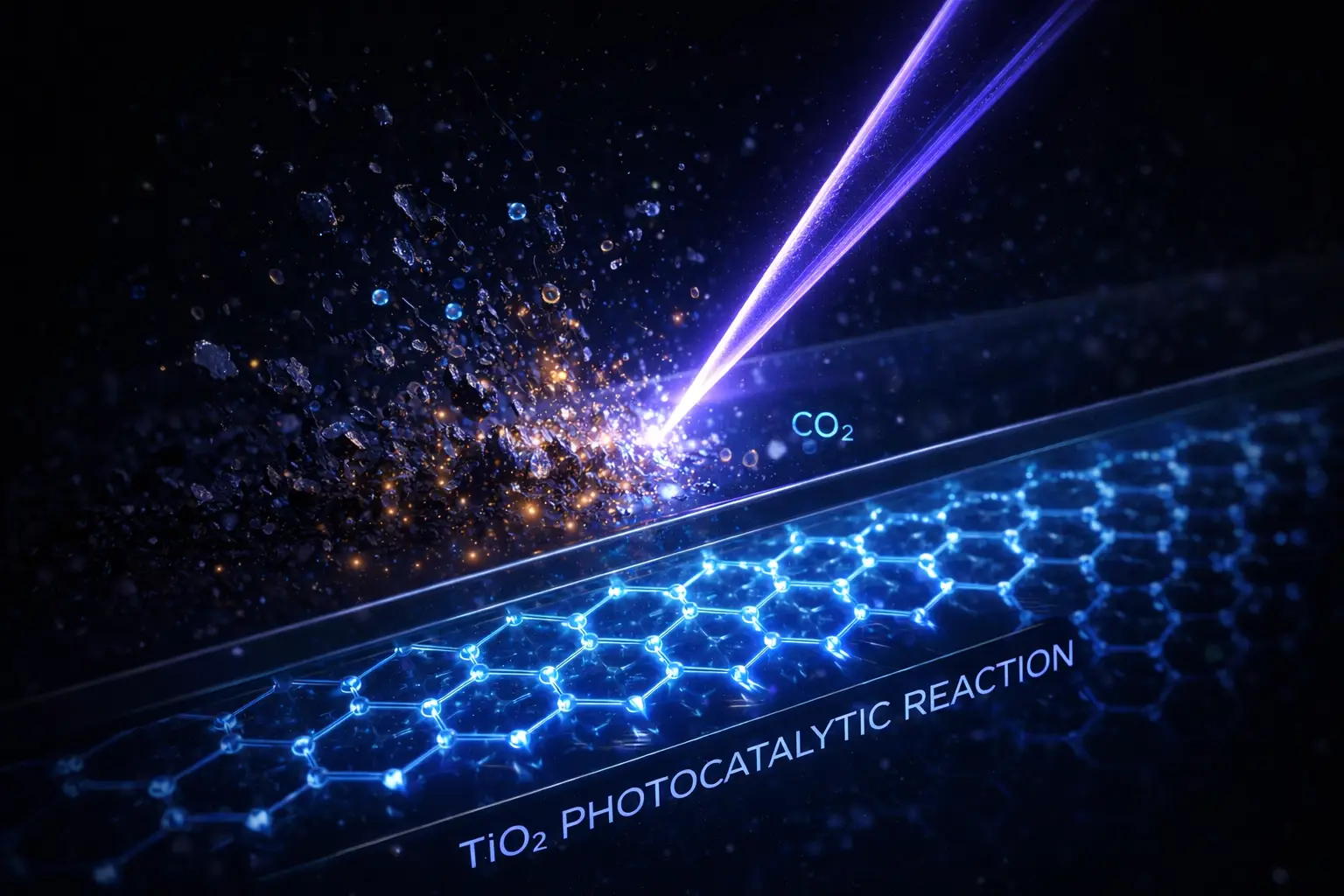
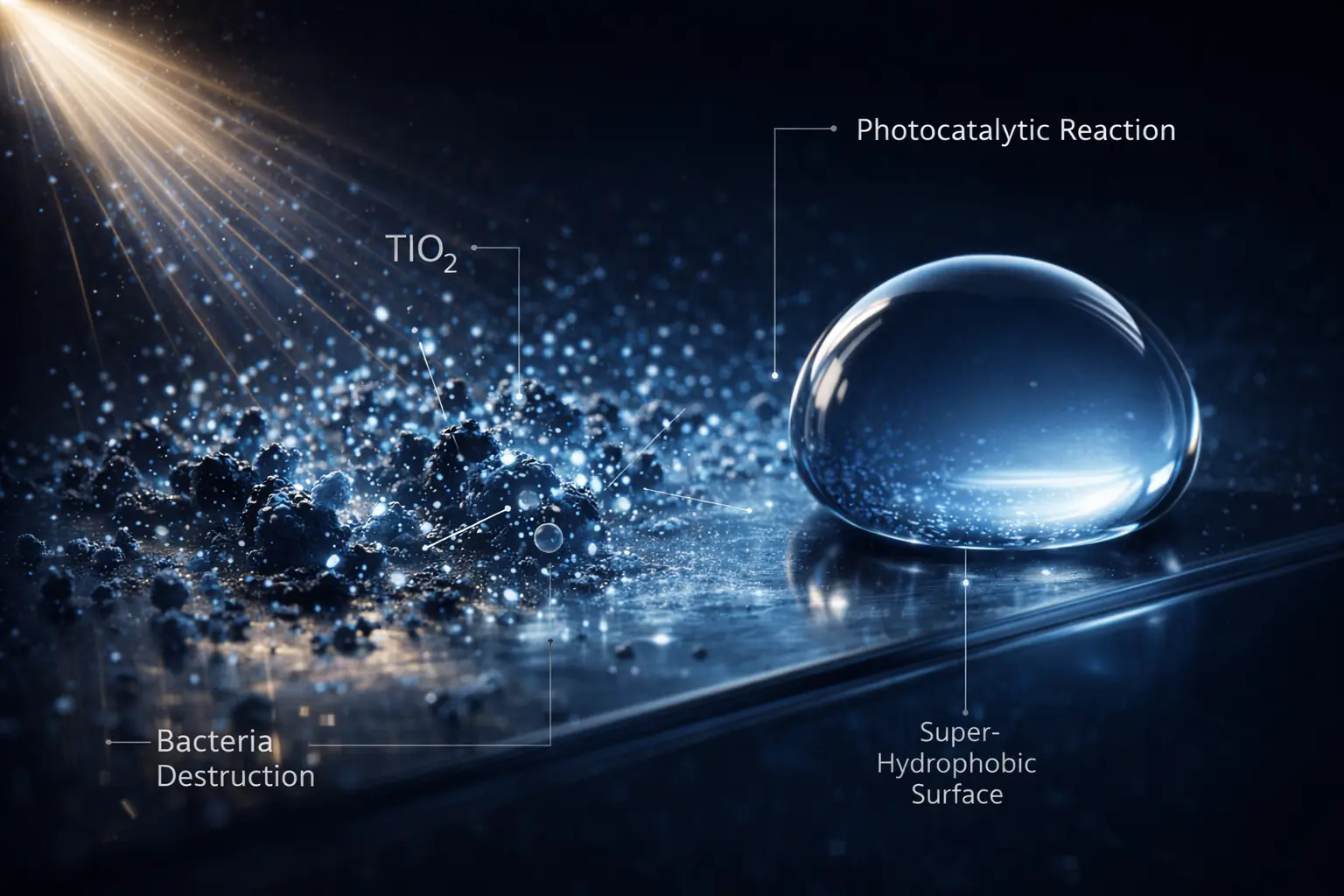
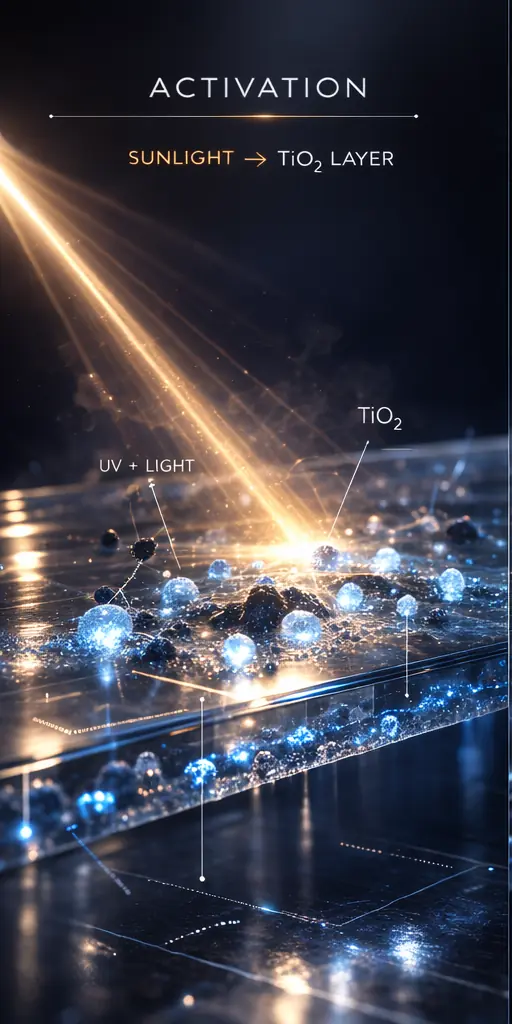
We integrate a titanium dioxide (TiO₂) layer into the surface structure.


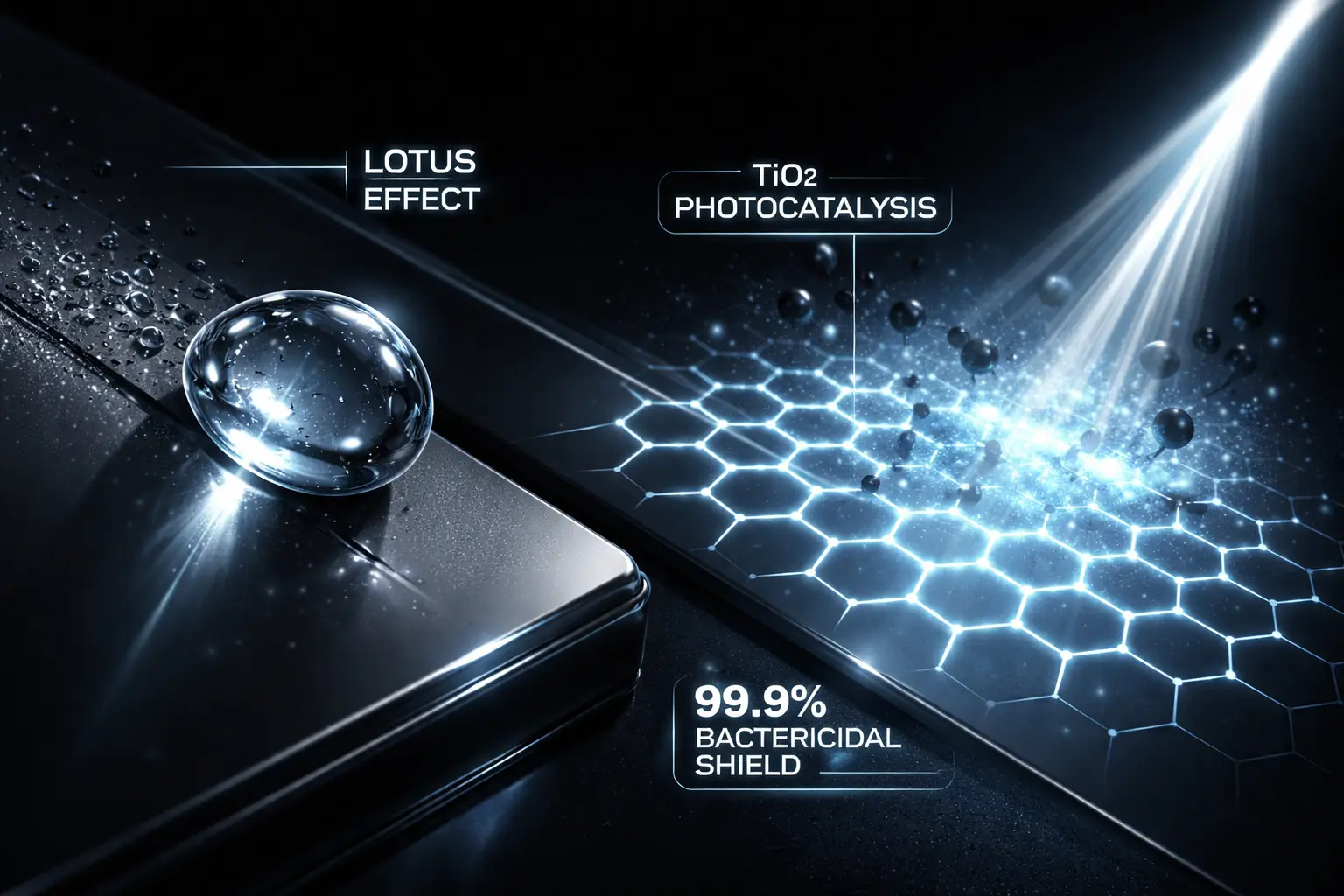
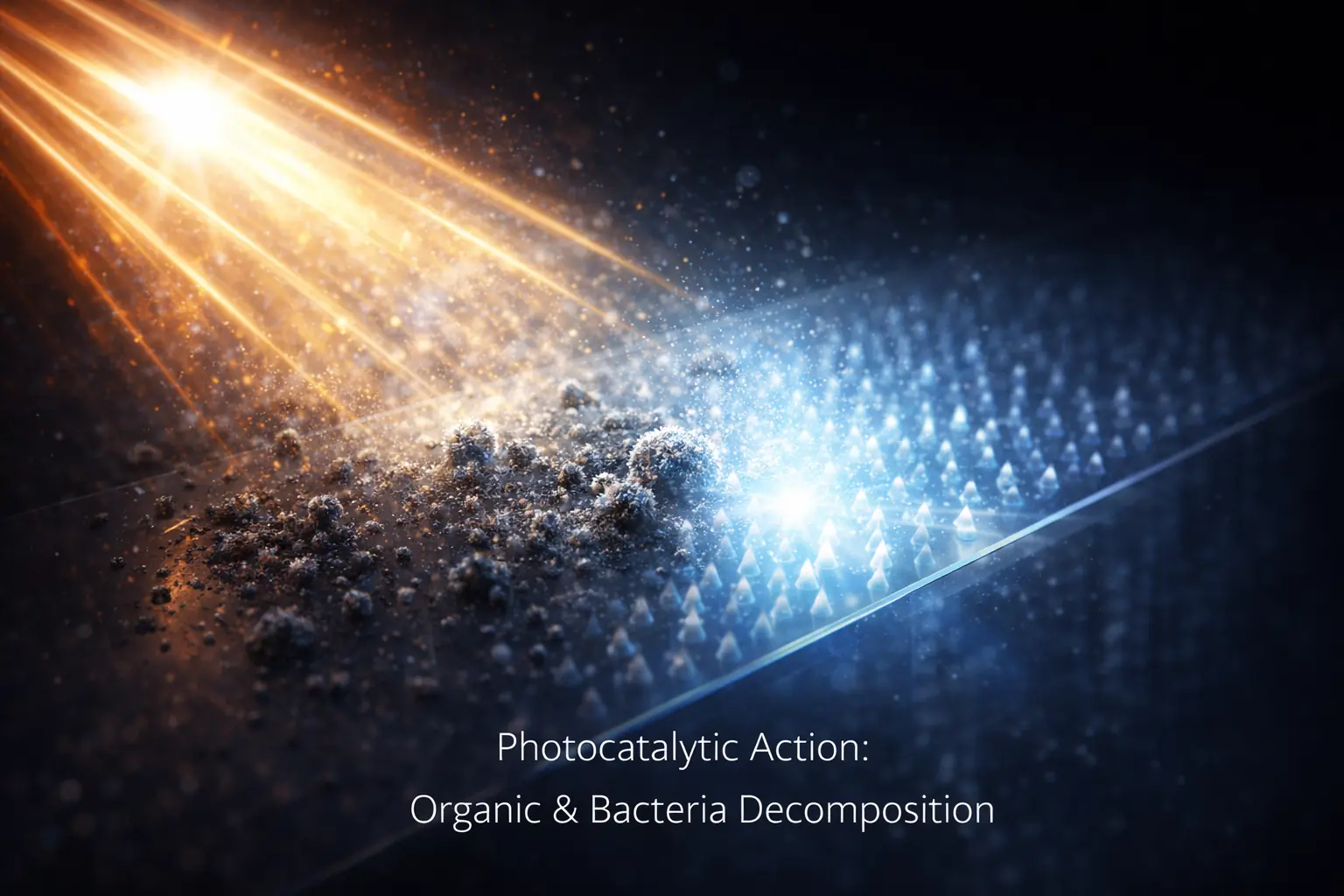
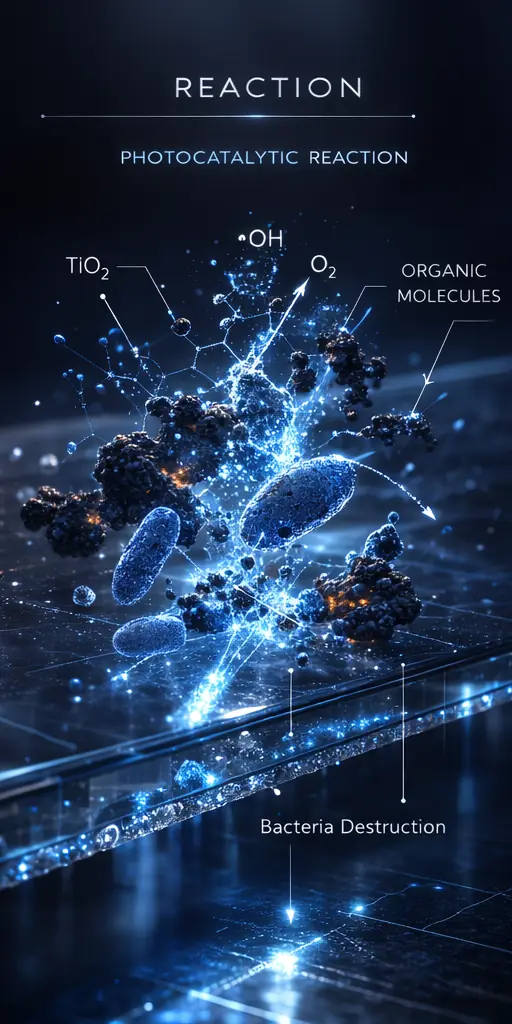
Under UV exposure, it activates a photocatalytic reaction:

    • breaks down organic pollutants and smog at molecular level
    • provides continuous antibacterial effect (up to 99.9%)
    • eliminates the need for chemical cleaning


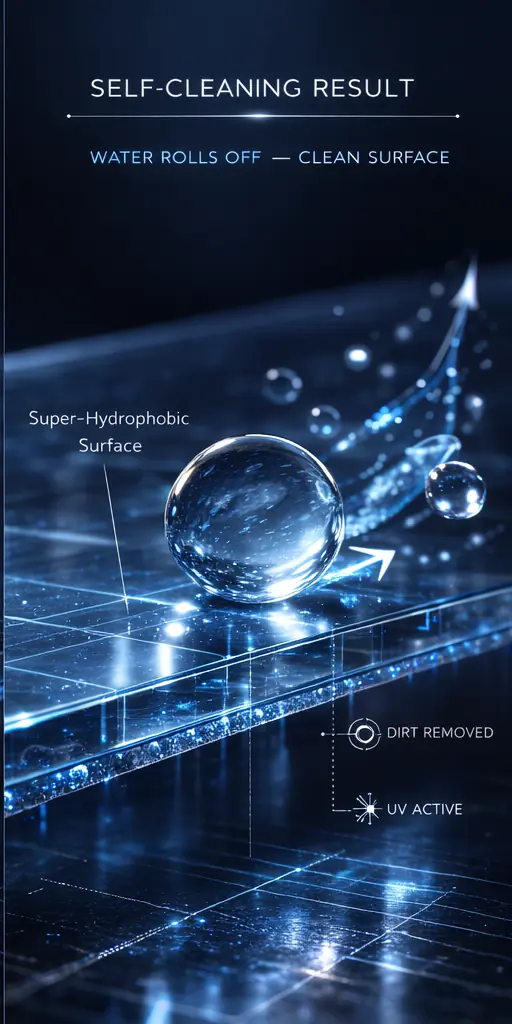
Combined with super-hydrophilic properties:

    • water spreads evenly across the surface
    • contaminants are washed away without residue


Result:


A façade that maintains clarity for decades — with near-zero maintenance.

ZERO MAINTENANCE APPROACH


Traditional façades require:

      • regular industrial cleaning
      • water consumption
      • chemical usage
      • operational downtime


VECT eliminates this dependency.


This is not a coating.

This is a self-sustaining surface system.

ESG INTEGRATION — FROM COMPLIANCE TO PERFORMANCE


An engineering bridge to ESG outcomes


VECT enables buildings to actively contribute to environmental performance:

        • reduced energy consumption → lower CO₂ emissions
        • improved air quality via pollutant neutralisation
        • enhanced sustainability ratings (LEED, BREEAM, etc.)

This positions the asset as:

        • more compliant
        • more efficient
        • more valuable

INVESTMENT PERSPECTIVE


VECT should be understood not as a material upgrade, but as:

an embedded energy efficiency system at the building envelope level


It delivers:

        • up to 30–40% reduction in cooling-related OPEX
        • potential HVAC system downsizing at design stage
        • measurable improvement in asset energy rating (EPC / BREEAM)
        • long-term performance stability (non-degrading nanolayer)

CLOSING STATEMENT


The façade is no longer a boundary.


It is a control system.

REAL-WORLD DEPLOYMENTS

View completed projects

Прокрутить вверх